On Saturday 22nd and Sunday 23rd August, the All-Ireland Pollinator Plan visited Waterford City for the 2026 Wild Bee Festival.
Organised by the National Biodiversity Data Centre in collaboration with the B Corridor group, this year’s Wild Bee Festival was an opportunity for community groups to come together and learn how to protect pollinators in Waterford. Following the success of previous years in Skerries, Tralee, Galway City, and Abbeyleix, we were delighted to come to Waterford for the fifth year of the festival.
Connecting nature and communities
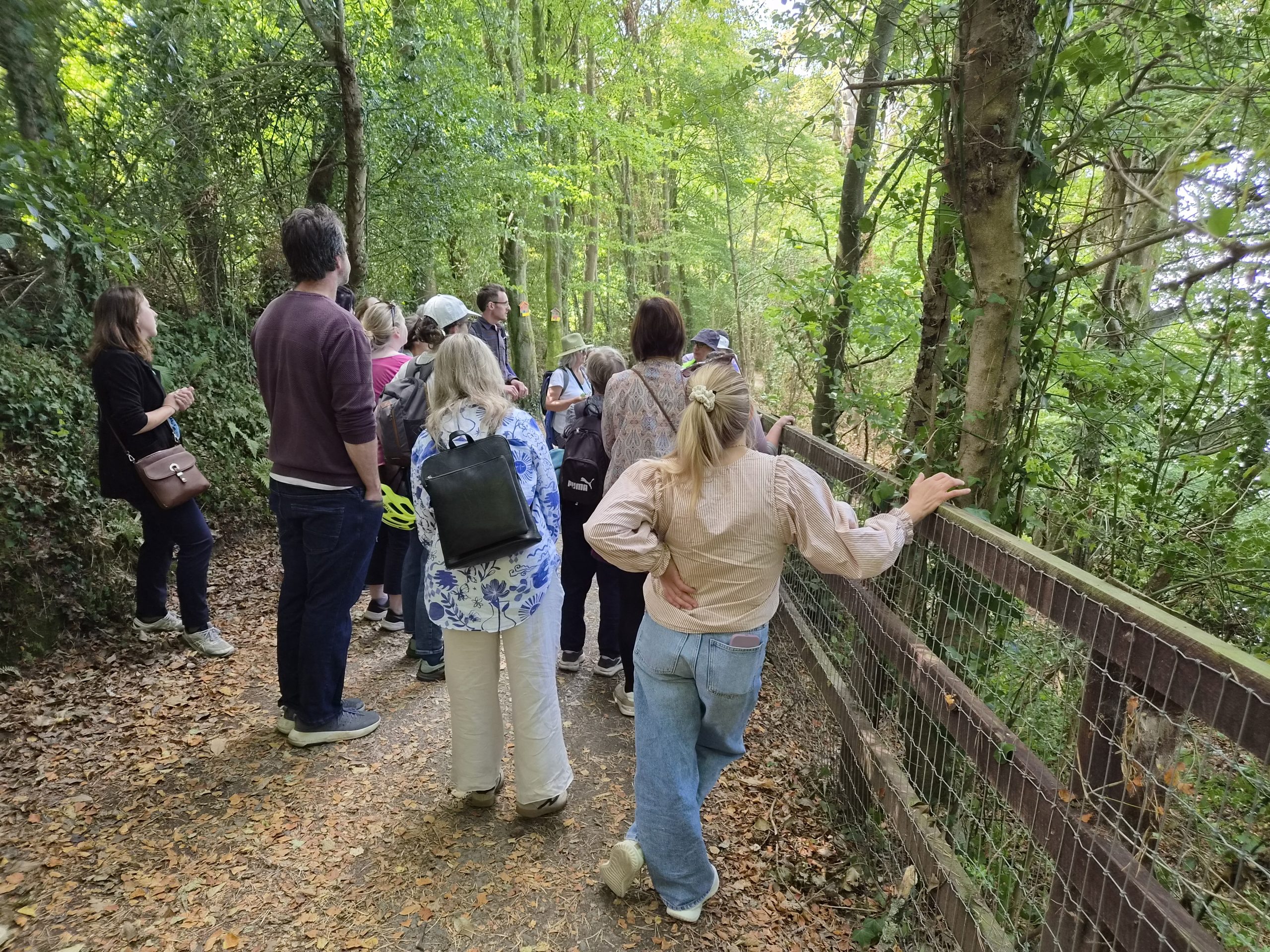
Saturday began with lively chats over coffee and we all got a chance to admire a quilt created by the Central Library Craft Group depicting biodiversity loss in recent decades. Then, Cecily Maher from the B Corridor group kicked the festival off by welcoming us to Waterford and telling us about the work the group has done to help biodiversity and create opportunities for local residents to connect with nature.
The B Corridor is an ecological corridor running between the Newtown and Ballygunner areas of Waterford City. It includes the habitats of the Lower River Suir Special Area of Conservation (SAC) and the Knockboy Wetlands. Established in 2024, the B Corridor Group brings together local residents, community groups, faith groups, schools and businesses to restore habitats, protect wildlife and create a connected, resilient natural environment. Cecily talked about the group’s recent work, including along the Maypark Nature Trail, and launched their new website.
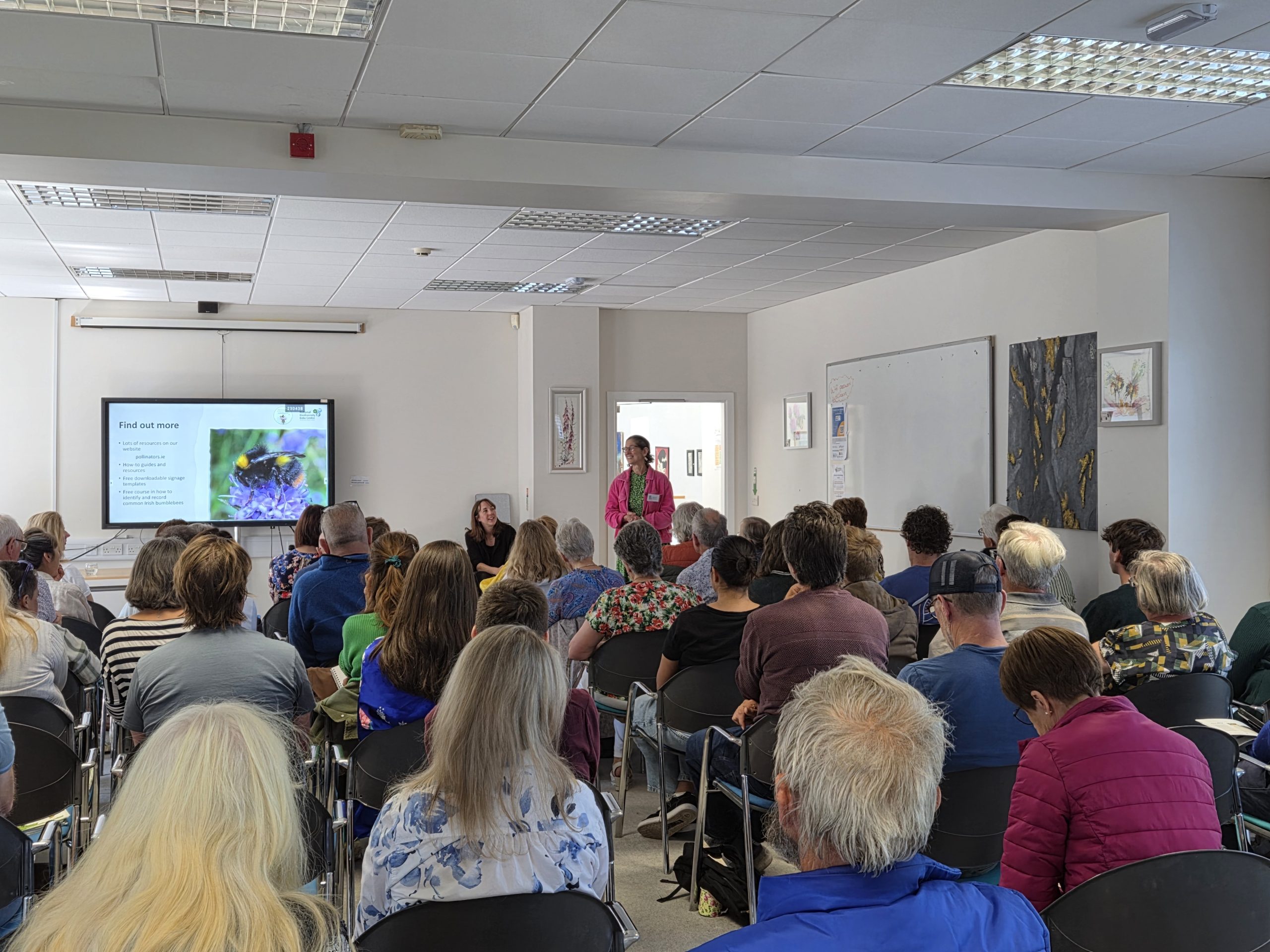
Next Dr Úna Fitzpatrick from the National Biodiversity Data Cente gave us an introduction to Ireland’s bees, sharing some fascinating and strange facts about the 100+ species of wild bee that live on the island of Ireland. One third of these bees is in decline, so afterwards Kate Chandler from the National Biodiversity Data Centre spoke about how communities can help pollinators with simple actions such as reducing mowing and choosing pollinator-friendly plants.
Cross pollinating ideas
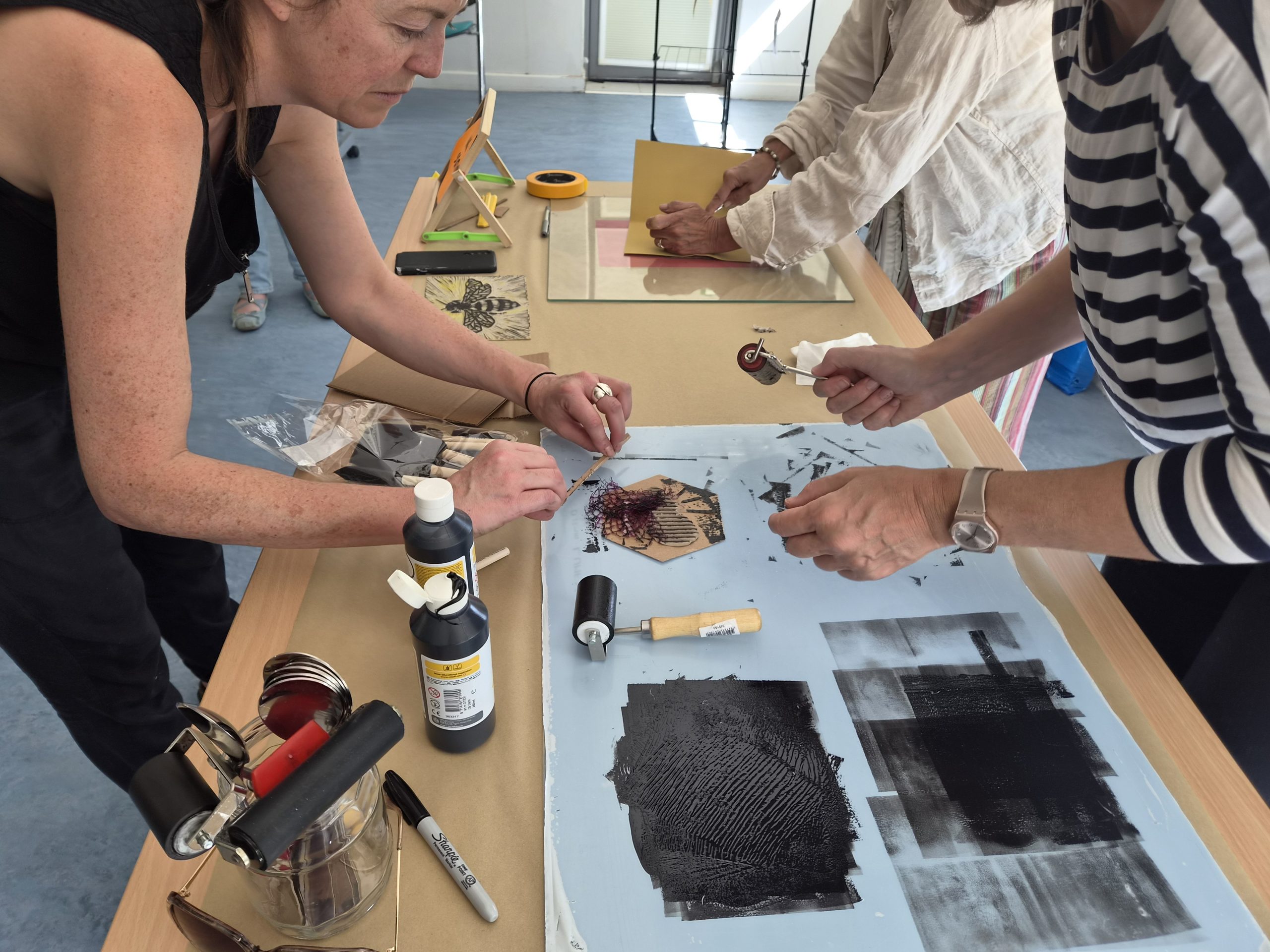
The Waterford Education Support Centre provided a delicious lunch, and the lunch break saw the start of artist Siobhán Clancy’s Cross Pollination Station workshop, where we had a chance to have a go at bee-themed printing, collage and crafting.
Ecologist Dr Fiona MacGowan started the afternoon talks with an overview of how different communities around the country are helping wild bees, including her own town of Abbeyleix, which hosted the Wild Bee Festival last year.
The day ended with a series of short talks. We started with B Corridor resident Simon Dowling, who took us through the development of his biodiversity-friendly garden, Brian Jacob from Waterford Trees for Life told us about his tree planting projects with schools and housing estates, and we ended the day with an inspiring speech from Jane Fraher of the Three Sisters Women’s Shed, who wove together the themes of the day with her wonderfully reflective ‘Three Garments — Make, Grow, Know‘.
From Bee Hotels to Biodiversity Action Plans
Sunday began with a talk by Micheál Kavanagh of the Déise Men’s Shed, who told us all about the Shed’s work helping pollinators and creating bee hotels for the local area. Some of these hotels were installed next door in the car park of St Joseph & St Benildus Catholic Church, where we spotted many of the holes occupied by cavity-nesting solitary bees.
Ciarán Byrne, a Senior Ecologist with FERS took us through the process of developing a Community Biodiversity Action Plan, having worked with several local groups to develop them.
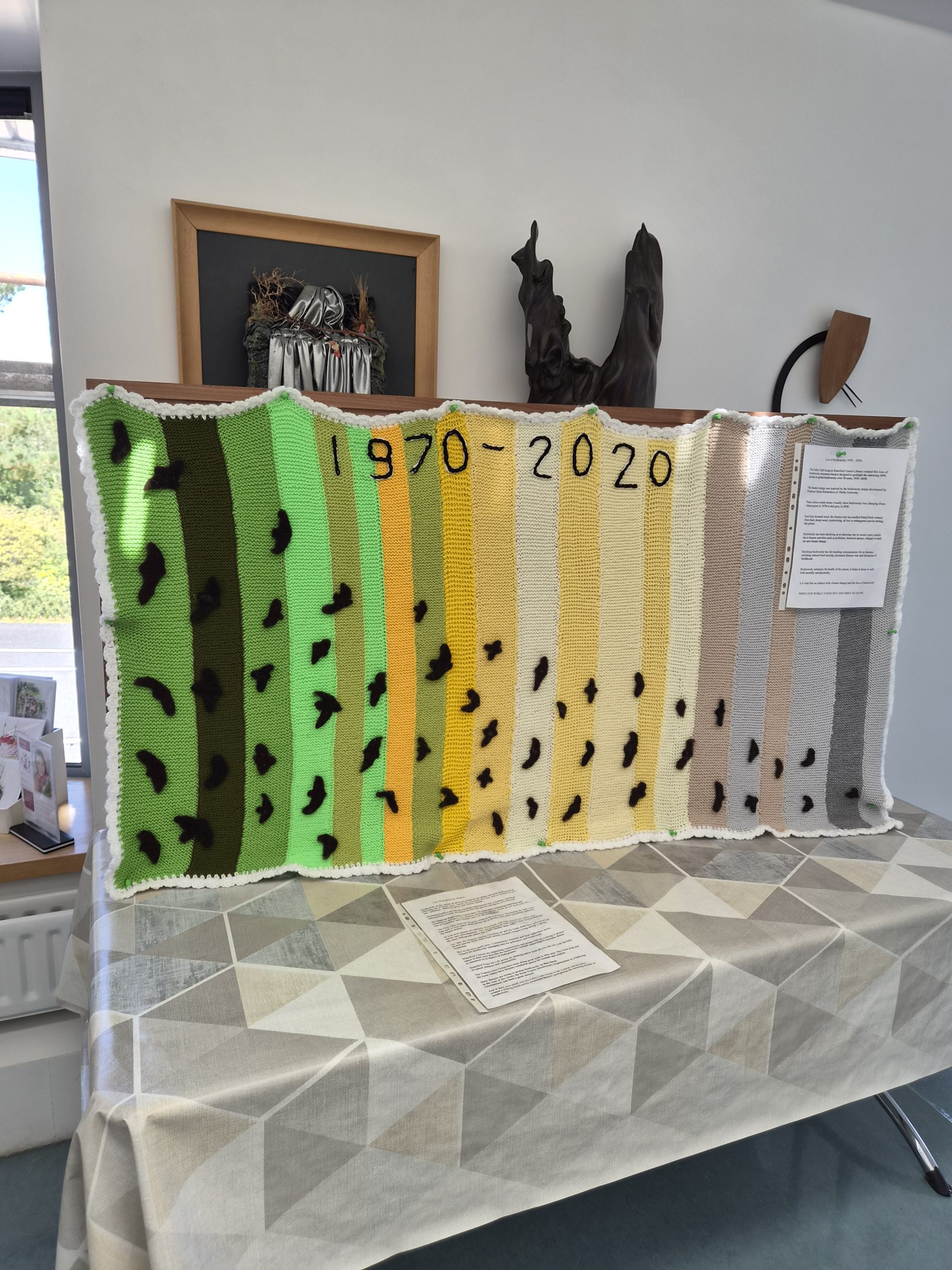
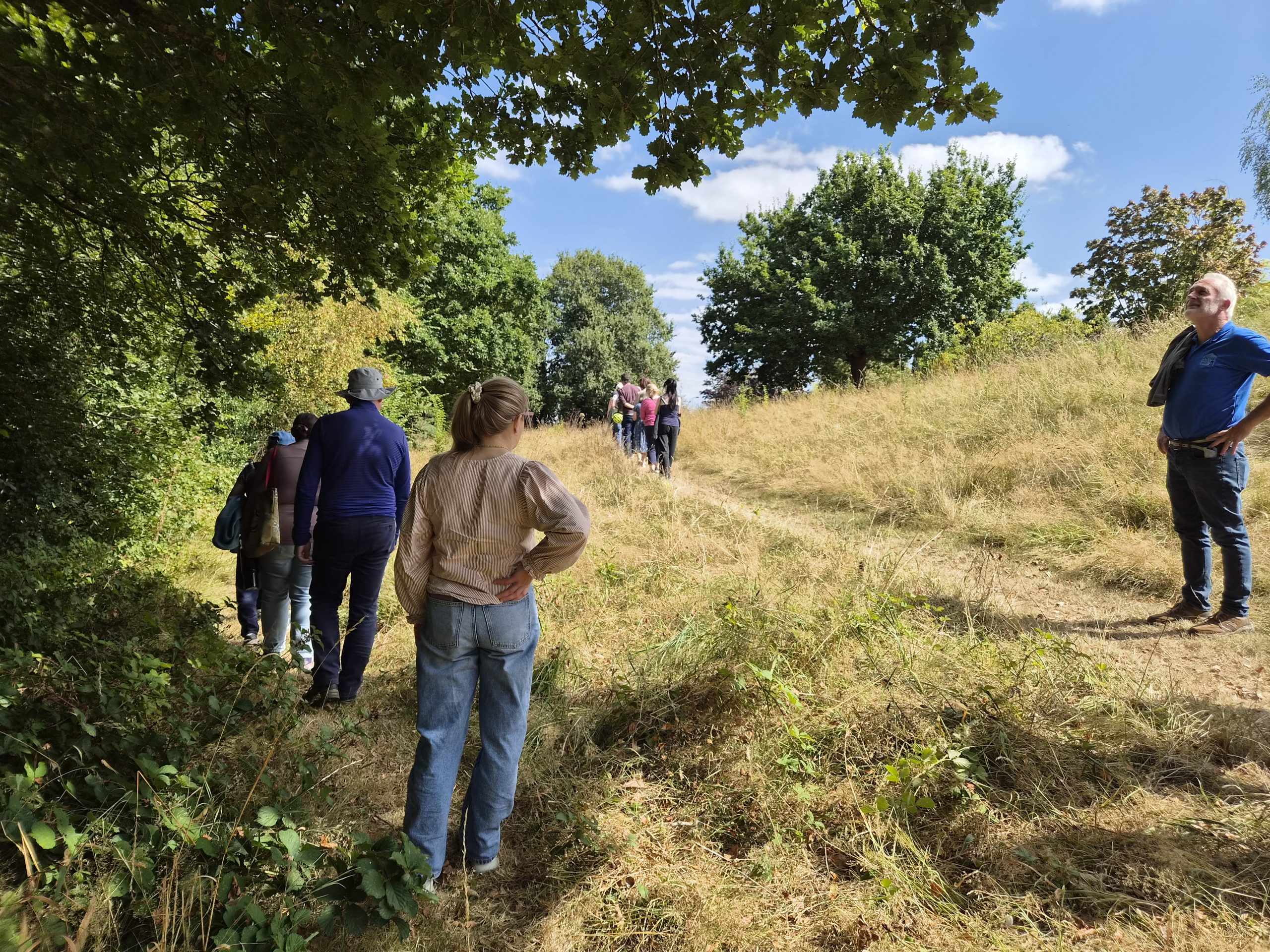
We ended the day with a guided tour of the Maypark Nature Trail, led by Denis of the B Corridor group and Ciarán Byrne. Making our way out of the centre, we started in the car park of St Joseph & St Benildus Catholic Church next door, where a dedicated group from the church have transformed the car park beds for pollinators. Heading up the hill, we joined the Maypark trail and admired the B Corridor group’s brand new signage. The tree-covered trail winds alongside the banks of the River Suir, backing onto gardens and residential areas. Despite the presence of invasive species in some areas, parts of the trail are havens for nature, and we spotted mining bee habitats, flower-filled meadows, and even a woodpecker nest!
We left Waterford with a real buzz, inspired by the work of the B Corridor and all of the speakers who are working to help pollinators and connect their communities with nature in different ways. A huge thank you to the B Corridor group and to all of our speakers and workshop leaders who helped make this year’s Wild Bee Festival a success!
You can find links to the presentations on the Wild Bee Festival homepage here: Wild Bee Festival » All-Ireland Pollinator Plan
Keep an eye on the Wild Bee Festival homepage for details of the 2027 festival… it might be coming to a town near you!
Find out more:
Local Communities: Actions to Help Pollinators
Online Course: Managing Communities for Pollinators