The All-Ireland Pollinator Plan is delighted to support the Dúlra Agreement, an initiative encouraging education system leaders and educational organisations to pledge their support for schools in helping biodiversity on school grounds.
The Dúlra Agreement has grown out of the Irish School Sustainability Network (ISSN), a community of students and teachers who are committed to teaching climate and ecological literacy in schools across Ireland. The Dúlra Agreement is supported by a steering committee and driven, in practice, by the Biodiversity Working Group for Schools. The National Biodiversity Data Centre has been a member of the working group since it was established in 2025.
Launching on 12th November 2026, the Dúlra Agreement (dúlra is the Irish word for nature) is a commitment for the leaders of Irish education to sign, promising to make school grounds better places for nature and to make biodiversity a priority in how schools are run.
So far, signatories include Education Support Centres, Education and Training Boards, patron bodies and organisations that work with schools.
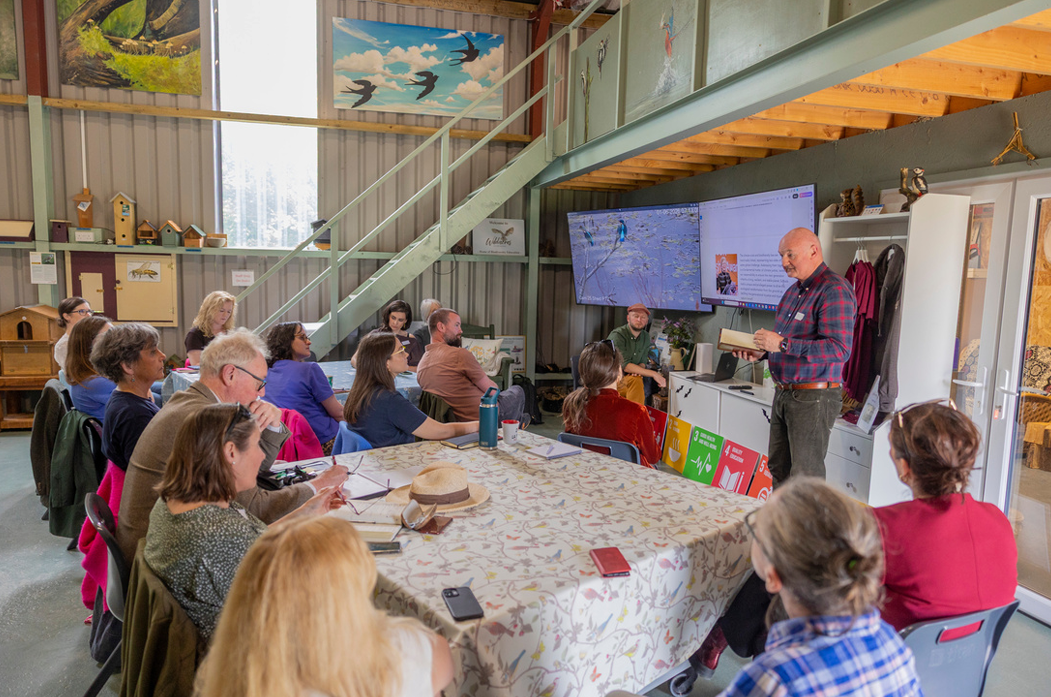
Creating a pollinator-friendly landscape
In Ireland, pollinators are in decline. One third of our wild bee species are threatened with extinction. This is largely due to a loss of habitat that provides them with food and shelter. The All-Ireland Pollinator Plan (AIPP) aims to work with all sectors across the island of Ireland to create a landscape where pollinators can survive and thrive. It is managed by the National Biodiversity Data Centre.
Schools have always had an important part to play in achieving this goal. Many have already taken extraordinary steps to help pollinators and wider biodiversity on their grounds, creating spaces not just for nature to thrive, but healthy environments where children and young people can learn and grow.
AIPP Resources such as How to Develop a Pollinator Plan for your School and free online course Managing School Grounds for Biodiversity, developed in collaboration with the Department of Education, have already helped schools take simple, evidence-based actions such as reducing mowing to create meadows, eliminating pesticides, and creating pollinator-friendly sensory gardens and outdoor classrooms – spaces where nature and students can thrive.
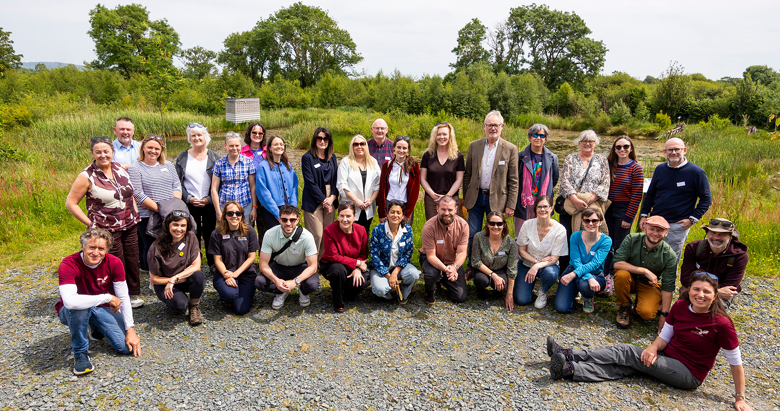
Mapping biodiversity-friendly school grounds
The All-Ireland Pollinator Plan is delighted to see mapping written into the Dúlra Agreement. Schools are encouraged to engage with the AIPP and map grounds for biodiversity using the online mapping system ‘Actions for Pollinators’.
Actions for Pollinators is a state-of-the-art GIS-based online mapping system that transparently tracks collaborative efforts across all sectors to create a pollinator-friendly landscape. Publicly accessible and easy to use, it facilitates social connections and helps drive collective action to create nature corridors.
The current system was launched by the National Biodiversity Data Centre in 2017. It is currently being redeveloped to be smartphone compatible, more user-friendly, and to enable the visualisation of pollinator ‘corridors’ across the landscape, helping achieve the ultimate goal of creating pockets of nature every 200 metres. The new version of Actions for Pollinators is currently under development and will launch in the coming months.
Kate Chandler, Communities Pollinator Officer at the National Biodiversity Data Centre, said:
“We are delighted to support the Dúlra Agreement, and to be part of the ISSN’s Biodiversity Working Group for Schools. All over Ireland, many schools are already making a huge difference to biodiversity. Pollinator numbers are in decline, but local populations are increasing where actions are being taken to help them. This is a sign that biodiversity can bounce back if we give it a chance. If every school in Ireland took just one action, the impact would be huge – not just for biodiversity, but for the children who will then become passionate champions for nature.
The aim of the All-Ireland Pollinator Plan 2026-2030 is to create pockets of nature every 200 metres. This cannot be achieved by individual schools alone, but by a network of places within our communities that are managed for the benefit of pollinators and ourselves. The Dúlra Agreement is a hugely positive step in that journey. Moreover, it signals the commitment of educational leaders to support schools in managing their grounds for the benefit of biodiversity and future generations.”
The Dúlra Agreement will be launched by Minister Christopher O’Sullivan on 12th November at Firhouse ETSS in Dublin, when system leaders will be invited to sign up.

Find out more:
Irish Schools Sustainability Network
All-Ireland Pollinator Plan: Schools homepage