Giving Grasslands More Time: How Small Farming Changes Can Support Bumblebees. Lydia Thompson, a PhD researcher at University College Dublin, tells us about her research.
This blog is part of the ‘Dispatches from Researchers’ series, which features guest articles written by experts in pollination and related fields.
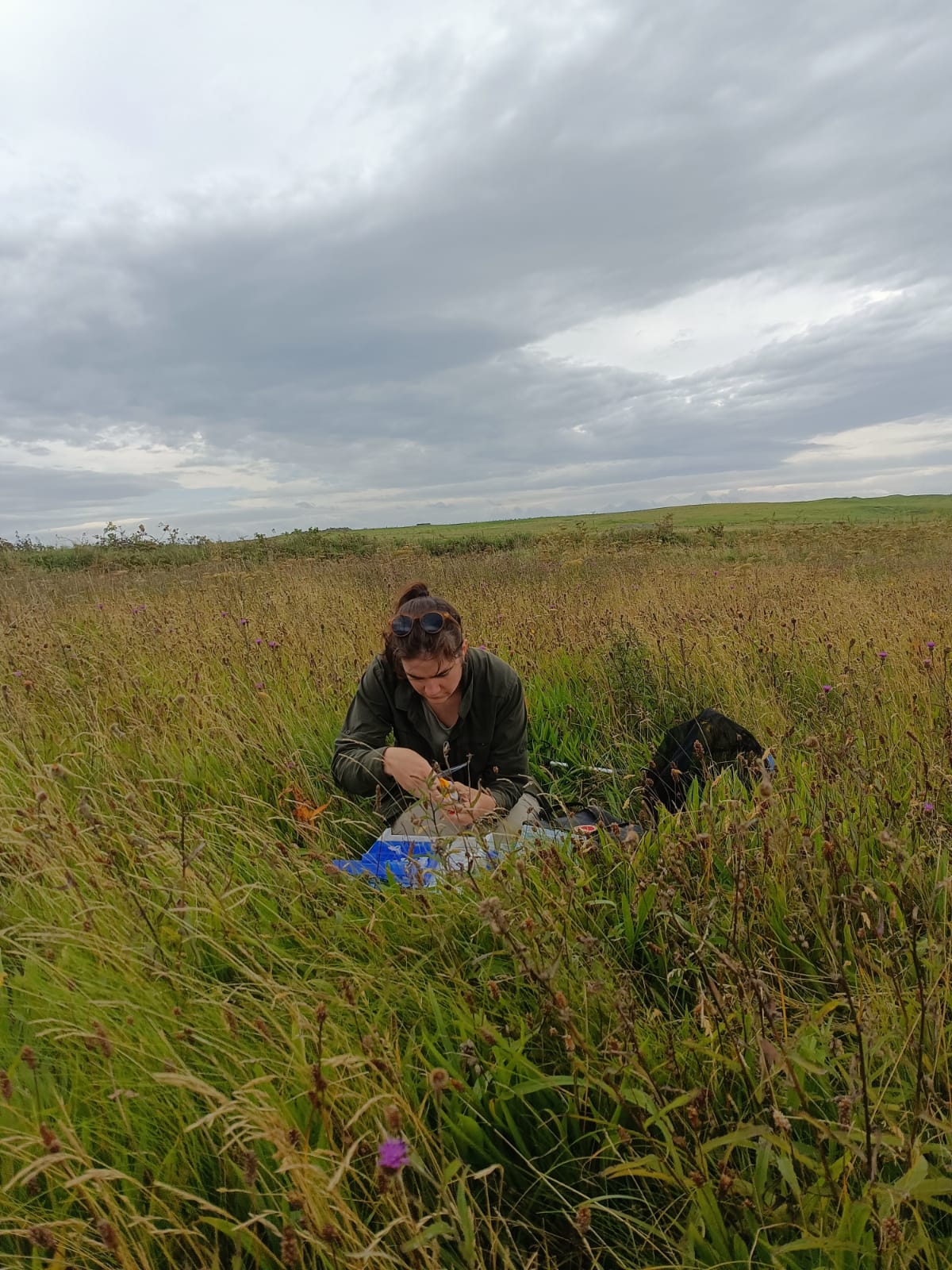
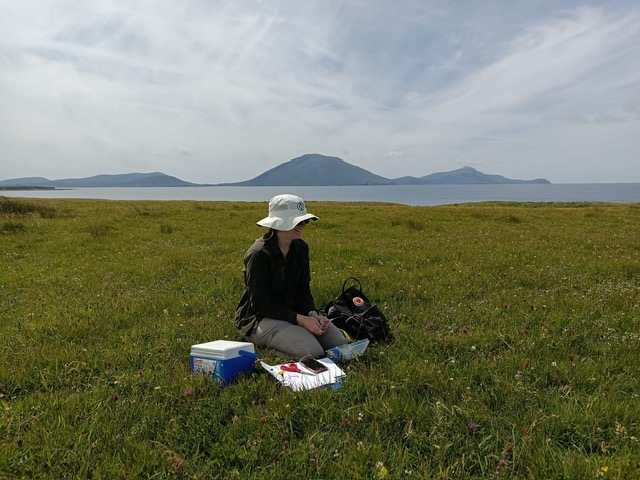
Over the past few years, I’ve spent a lot of time in grasslands across northwest Ireland — watching bumblebees, counting flowers, and working closely with farmers. What started as a research project quickly became something more personal. The more time I spent in these fields, the clearer it became that small decisions in how we manage land can have a big impact on the insects that depend on it. One thing stood out early on: timing matters.
Grasslands can look lush and green, but for bumblebees, that doesn’t necessarily mean they are useful. Bees need flowers, and they need them across the entire season. In many grasslands, there is a gap later in the summer when flowers become scarce, creating a potential bottleneck for pollinators that are still actively foraging.
As part of this research, we worked with farmers involved in the Great Yellow Bumblebee Project to test two relatively simple management changes: delaying mowing and reducing or delaying grazing. These are not drastic interventions, but small adjustments in timing that can often fit within existing farming systems while still supporting biodiversity.
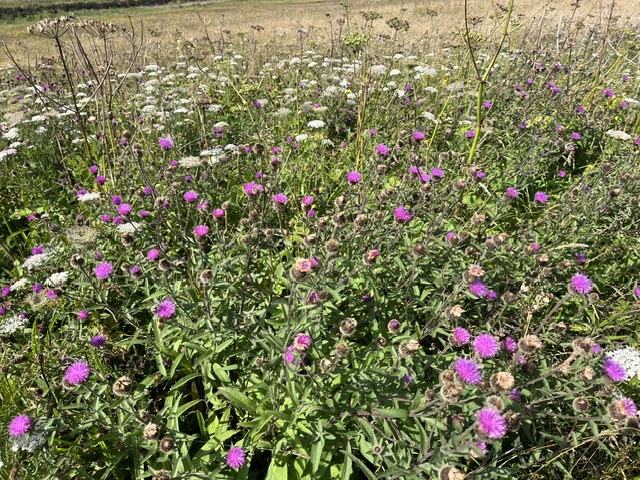
The results were encouraging. Fields where mowing and grazing were delayed supported higher floral abundance and attracted more bumblebees. The benefits were especially noticeable later in the season, when floral resources were becoming scarcer across the wider landscape. While we found more bees in late summer overall — likely reflecting natural colony development through the season — these managed grasslands appeared to provide important late-season foraging habitat at a time when resources elsewhere were limited.
Interestingly, the strongest responses were seen in common bumblebee species rather than rare species. However, many rarer species emerge and remain active later into the season, suggesting that extending these interventions further into September could provide even greater benefits for species of conservation concern. This is an important practical takeaway from the work: relatively small changes to the timing of management could substantially improve the availability of late-season forage for pollinators.
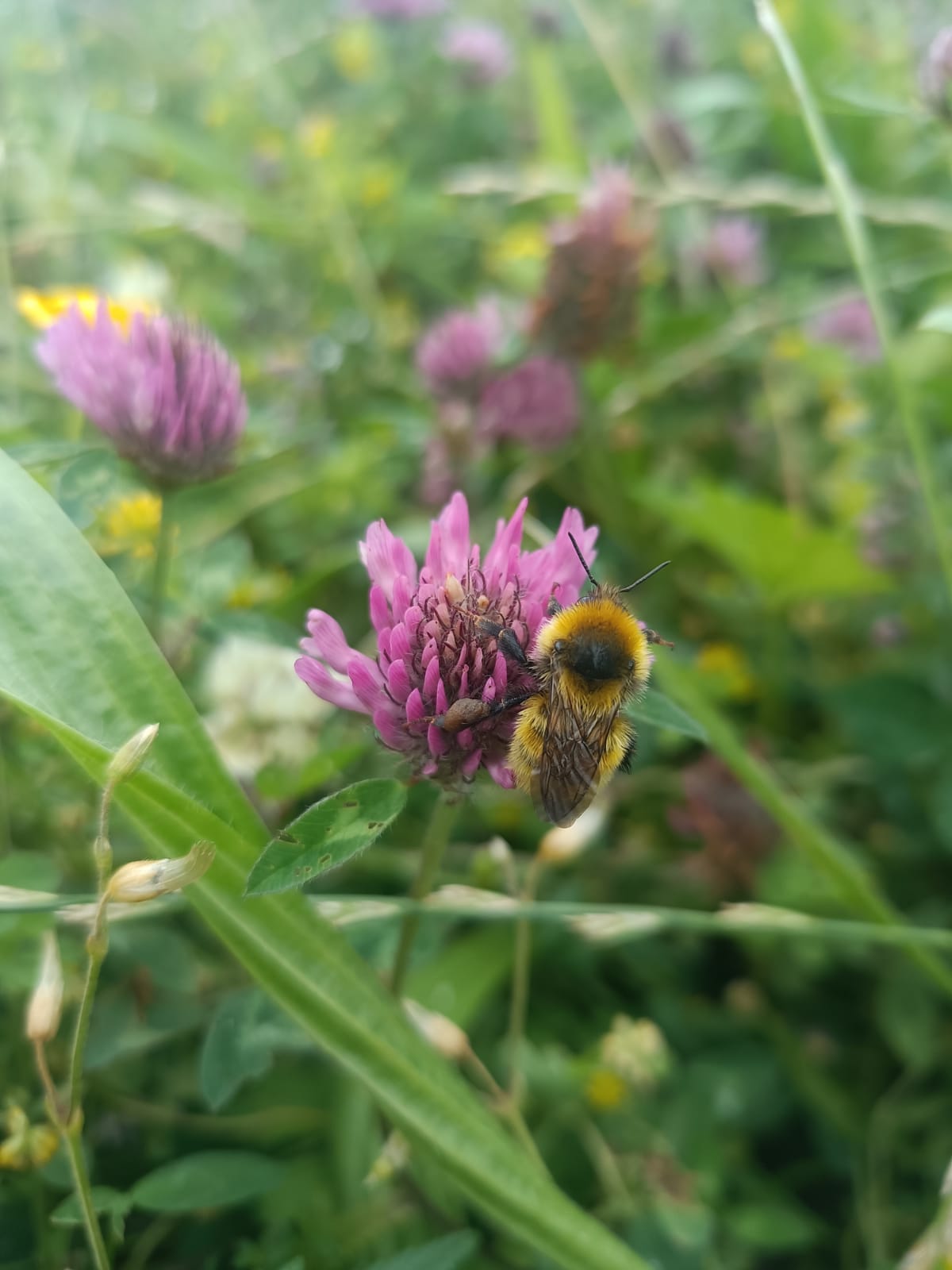
We did not necessarily find evidence that these management changes increased the total number of bees in the wider landscape. Instead, bees appeared to use these fields more intensively, suggesting that habitat quality had improved. In other words, these grasslands were becoming better places to forage. That distinction matters because it shows that improving the quality and continuity of floral resources can have immediate ecological benefits, even before broader population-level changes become detectable.
For me, one of the most rewarding aspects of this work has been collaborating with farmers. These changes are not about taking land out of production, but about finding realistic ways to support biodiversity within working agricultural landscapes. Of course, there are trade-offs. Delaying mowing can influence forage quality, and grazing decisions are often shaped by weather, labour, and practical farm management constraints. However, there are also real opportunities here, particularly where agri-environment schemes can support farmers financially in making pollinator-friendly management decisions.
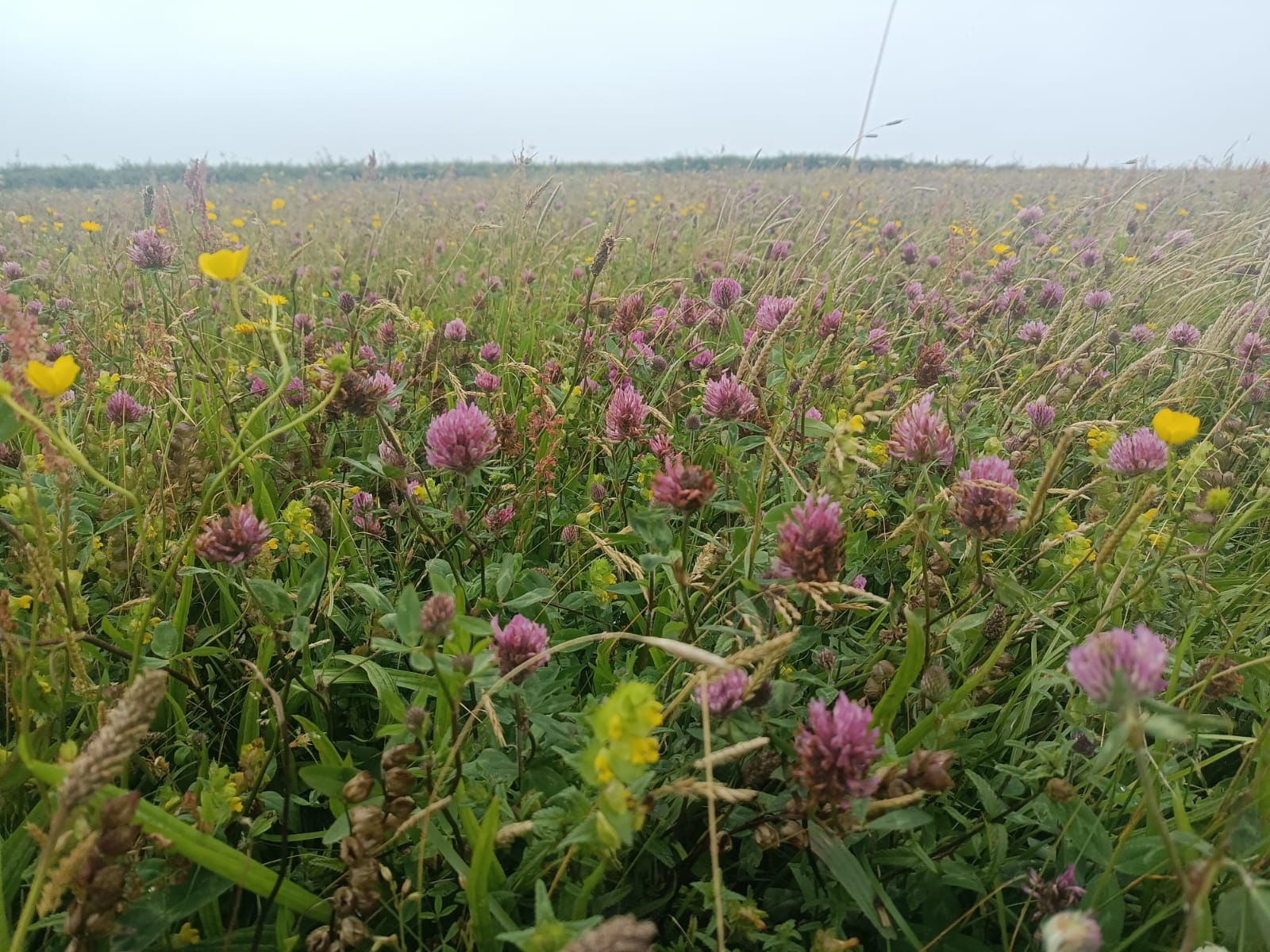
The broader message from this research is that supporting pollinators does not always require dramatic landscape-scale interventions. Sometimes, it is simply about giving nature a little more time. Allowing grasslands to flower for longer can make a meaningful difference for bumblebees, particularly during periods when floral resources are otherwise limited.
Spending time in these landscapes has made me appreciate just how responsive pollinators are to even small changes in management. It gives me hope that, with the right support and collaboration, we can create agricultural systems that work for both people and pollinators.
Sometimes, it really is the simplest changes that matter most.
I’d like to sincerely thank all of the farmers who participated in this work and the wider Great Yellow Bumblebee Project team, including Karina Dingerkus and Alex Hayden, for their support and collaboration throughout the research.
About the author
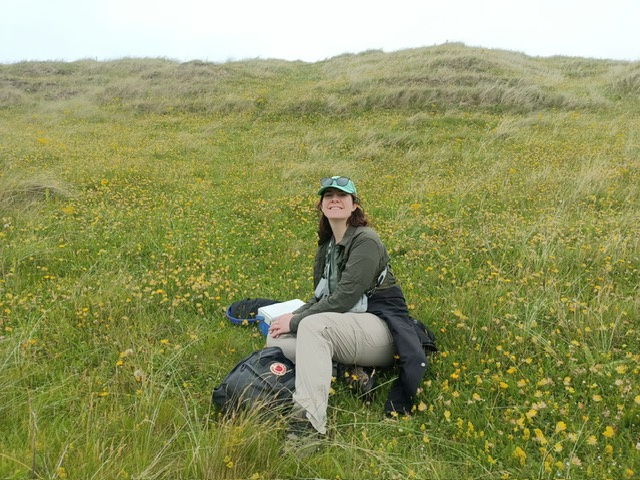
Lydia Thompson is a final-year PhD researcher in the Stanley Ecology Lab at University College Dublin, where her work focuses on the impacts of agri-environment schemes on rare and common bumblebee populations in Ireland, with a particular focus on the Great Yellow Bumblebee (Bombus distinguendus) and the Large Carder Bee (Bombus muscorum). Lydia graduated from University of St Andrews with a BSc (Hons) in Zoology in 2019 and completed an MSc in Biodiversity and Conservation at Trinity College Dublin in 2020, where her thesis examined how European agri-environmental schemes inadequately protect solitary bee species. Her research interests include pollinator ecology and conservation, sustainable agriculture, agri-environment policy, and the conservation of threatened pollinator species.
Find out more
Research paper: Impacts of delayed grazing and mowing on bumblebees and flowers in species rich grasslands
The Great Yellow Bumblebee Project
How to help pollinators on farmland