
Reducing mowing, even to just once a month, can help native wildflowers and beneficial grasses grow naturally, providing pollinators with food and shelter. In May, native plants are blooming – hedgerows are full of blossoming Hawthorn, and at ground level, wildflowers like Bush vetch, Red clover, and Cuckooflower pop up in the grass. This is an important time of year for pollinators, as many prepare to make their nests.
In this guest blog, we invited gardeners to share their low-mow lawn stories and tell us what they noticed popping up in May.
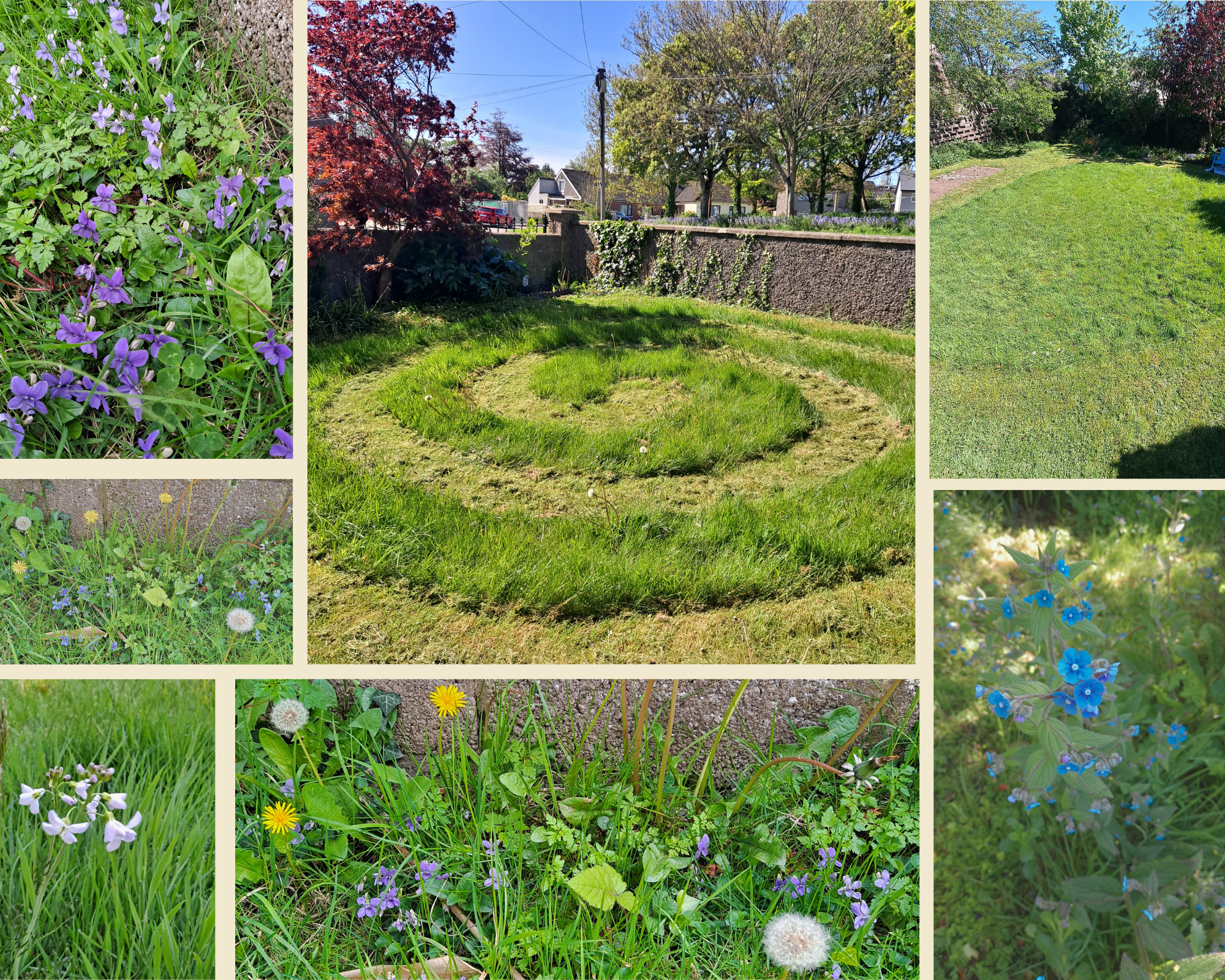
Fiona:
“I’m leaving the centre of the back lawn uncut and as an experiment have cut the front lawn in a spiral pattern. The Dandelions are nearly done but Cuckooflowers, Ramson, Dog violet, Speedwell and Bugloss are appearing. Lots of colour and variety in among the grasses.”
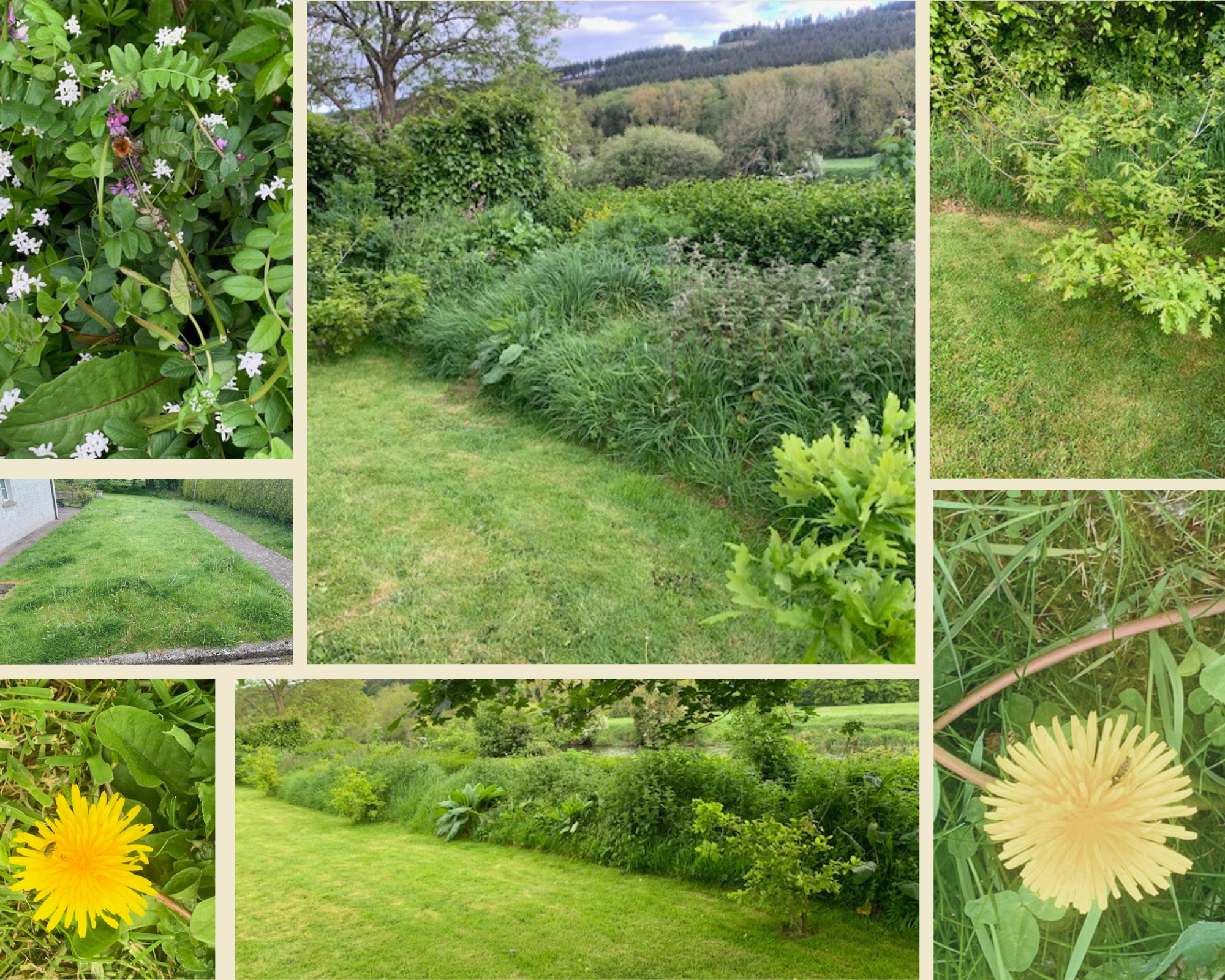
Ed:
“I stopped cutting the side and back lawn in early April. The side lawn has loads small blue flowers few pink ones. I cut front lawn pretty regular. At end of the lawn we have a small embankment of clay which has wild growth. I only cut this back maybe August every year. It has colourful plants and many insects each year. I have never planted anything here bar the Oak trees.”
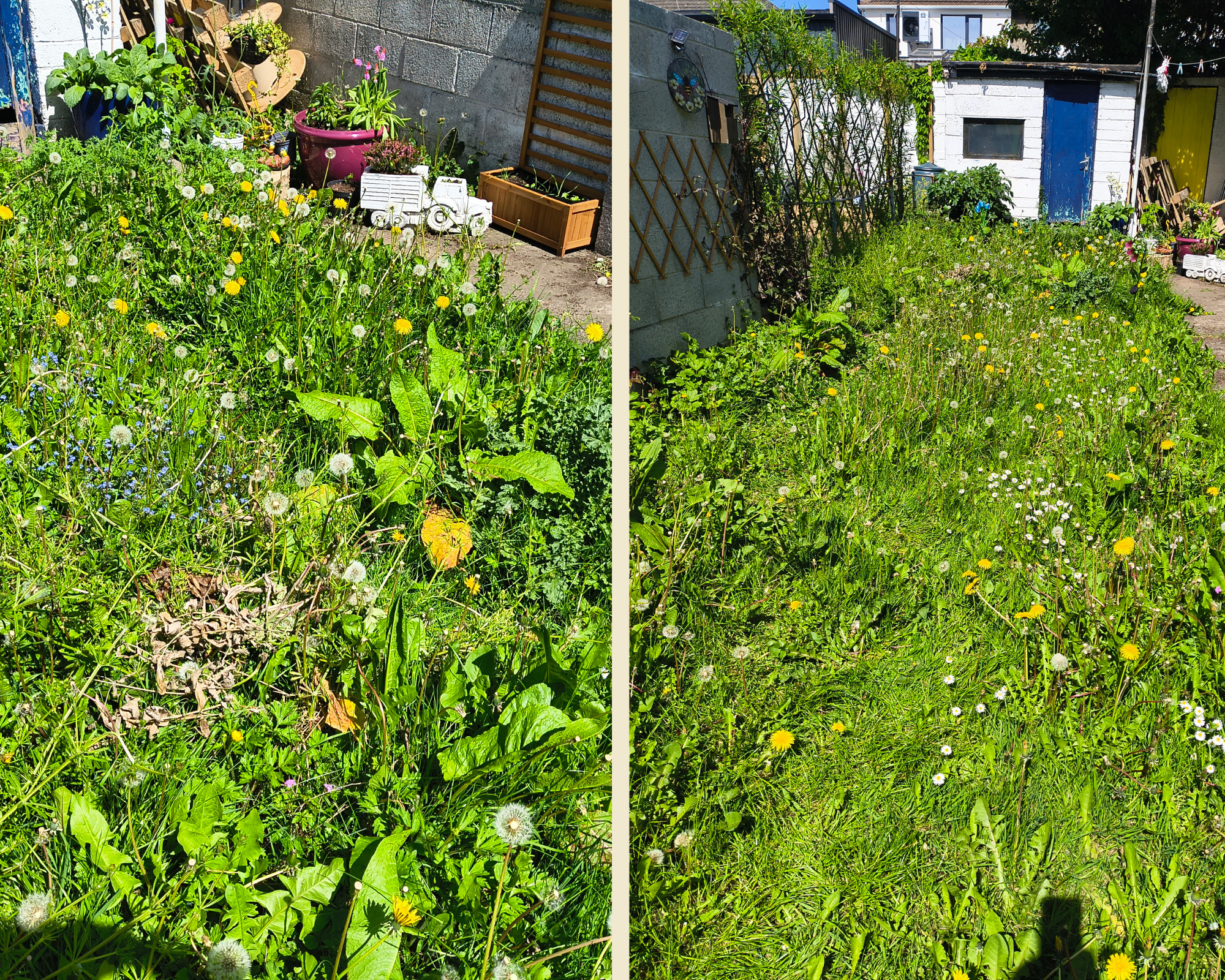
Cathal:
“My original plan for the garden was to mow it except for one or two wild ‘islands’ I was going to leave. But by the time I went to mow there were already so many dandelions I ended up making it these islands much bigger. I have two small paths and trails – one going left and one going right – they are basically nature trails where I walk to inspect what’s growing or water plants. I’m very impressed with the Forget-me-nots that have appeared and I’m also seeing Buttercups and Herb robert coming up on their own.
Originally, I was very happy with the Dandelions as there was a field of yellow. Now that they are gone to seed, they don’t appeal to me as much but there is still a lot of yellow and more appearing with the Buttercups and Wood avens. I suppose I just have to trust the process. The seeded or dead Dandelions have so much wildness around them that to mow them now would be killing a great habitat. There are two lovely big Ragworts making their way to flowering too and a lot of Daisies have appeared on the right path that I made.”
Shauna:
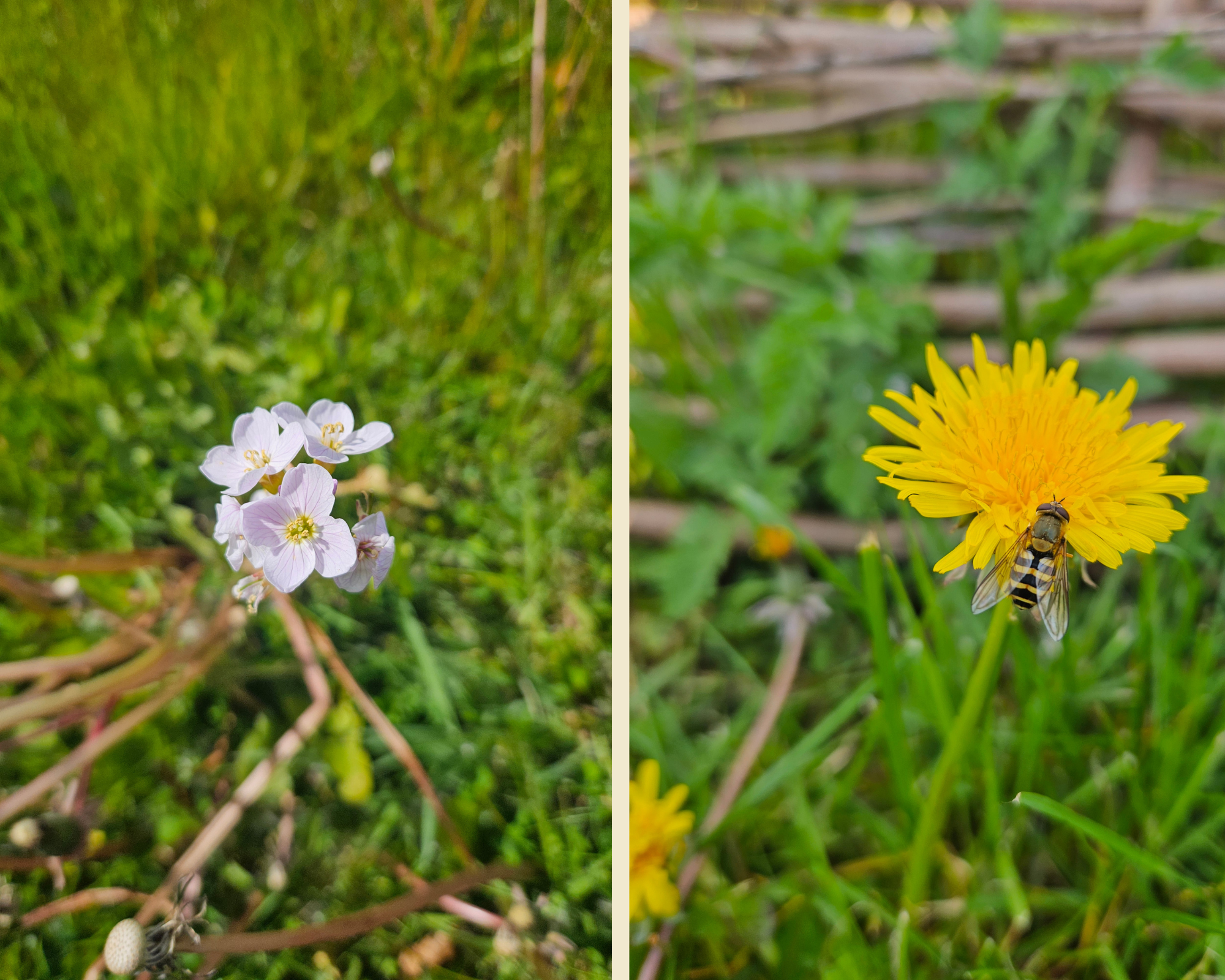
“May was a great month for the controversial Dandelion, with plenty blooming prettily in our lawn. These attracted all sorts of pollinators, such as hoverflies and bees. Later, Greenfinches and stunning Bullfinches gorged on their seed heads. We were also pleasantly surprised to find some Cuckooflower in our lawn – food for the caterpillars of the Orange-tip butterfly! There are yellow Buttercups and blue Speedwell starting to appear throughout the grass, providing nectar for pollinators and lovely to look at as well.”
Catherine:
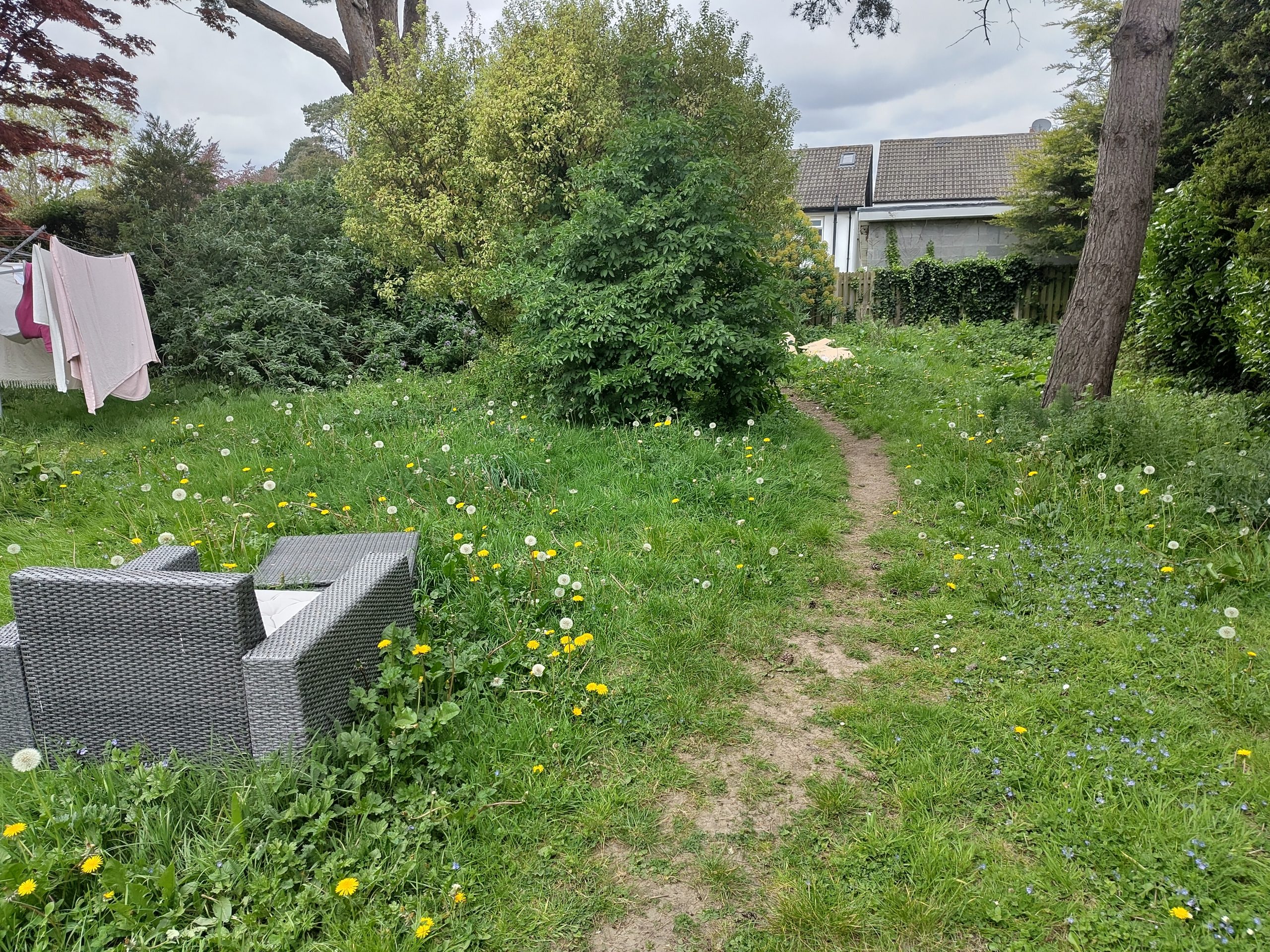
“We moved in in autumn 2024 and are delighted to have a garden for our two rescue sighthounds to run around in – you can see the trackway they’ve made as they run to the end of the garden every morning! We knew at once that we wanted to make the garden as friendly as possible for wildlife. When we moved in, the lawn had been regularly mowed, and the driveway and under the trees had been sprayed. We’ve let it rewild itself, and it’s been lovely to see it changing. It’s a palimpsest, as, each season, we see plants growing that tell us something about what was planted by people living here before us, about what grows in neighbours’ gardens and has drifted over, or what was once growing here and is coming back without mowing and spraying.
It’s really interesting to see the changes over the years too – we have a much bigger Nettle patch this year compared to last year. The birds and bees have been coming around in greater numbers this year. We had a wonderful crop of Dandelions in April and were thrilled to see a charm of Goldfinches feeding on the seed heads. Bullfinches, Blackbirds, Thrushes, Magpies, Wrens, Blue tits, Great tits, Coal tits and, very excitingly, a Treecreeper, have all made their homes here.
Yesterday, while hanging out washing, I spotted a little patch of Cuckooflower that has grown by the shed – this wasn’t in the garden last summer, so it’s testament to what 18 months of no spraying and no mowing can do. I looked it up and found that it’s a larval food of the Orange-tip butterfly, so fingers crossed that we may see some of those in the months or years to come.”
Thank you to these gardens and everyone who reduced mowing in May. If you want to start a low-mow lawn, find out more below:
Find out more:
- Create a short-flowering meadow
- Creating and restoring meadows in local communities and gardens
- Celebrating native wildflowers