Reducing mowing, even to just once a month, can help native wildflowers and beneficial grasses grow naturally, providing pollinators with food and shelter. In June, many meadow areas are at their peak, and pollinators are busy laying their eggs and foraging for nectar and pollen.
In this guest blog, we invited gardeners to share their low-mow lawn stories and tell us what they noticed popping up in June.
Cathal:
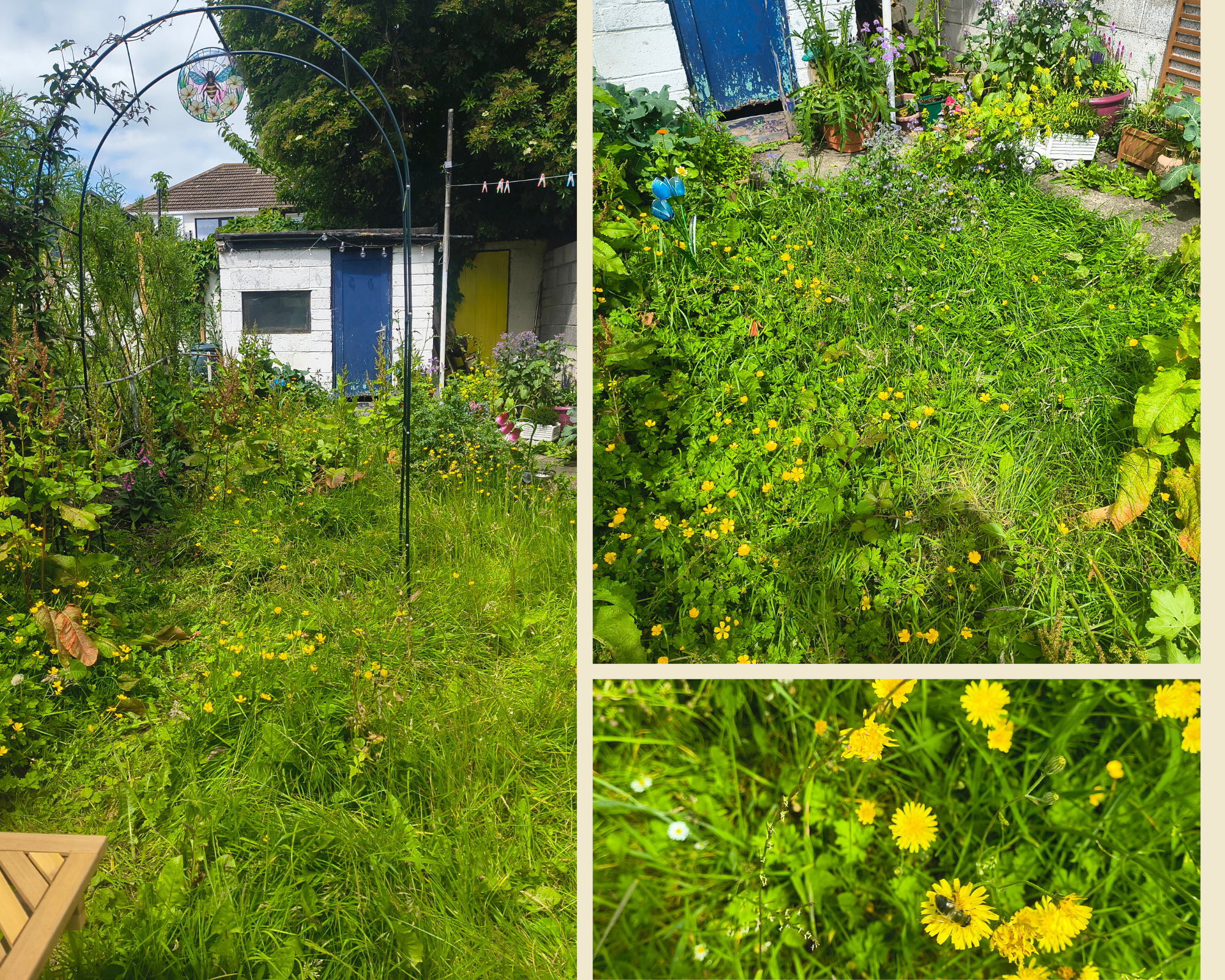
“Before, I had said I wasn’t too keen on the Dandelions now that they have gone to seed, but now, after a short while they’re not visible at all and have really been taken over by the Buttercups. One big benefit I have noticed from extending No Mow May into June was the emergence of what I think is Lesser Hawkbit or Cat’s-ear – they’re like yellow cornflowers. I first thought they were just smooth Sowthistle which I’m not too fond of, but these look great and complement the Buttercups well. I’m delighted I waited a bit longer for them to come up as they probably were in the lawnmower’s firing line.
I’ve had a big emergence of Dock leaves, which I will scale back shortly because they’re dominating the garden too much, I feel, but at the same time, it is nice to sit in the garden and watch them blow in the breeze, as with the long seedy grass forming now.
I have put some non-native plants in the garden front and back but my deal with biodiversity is to have them in pots, not in the ground. I have to remember that only a year ago when I moved to this house the back garden was being used by builders to pour out plaster/cement, so I try not to be too hard on myself for having a non-native plant as long as the pollinators enjoy it.
Finally, while it is not installed yet, I have bought a pond liner. If I can manage to attract a frog and it curtails the slugs I’ll be a happy man.”
Catherine:
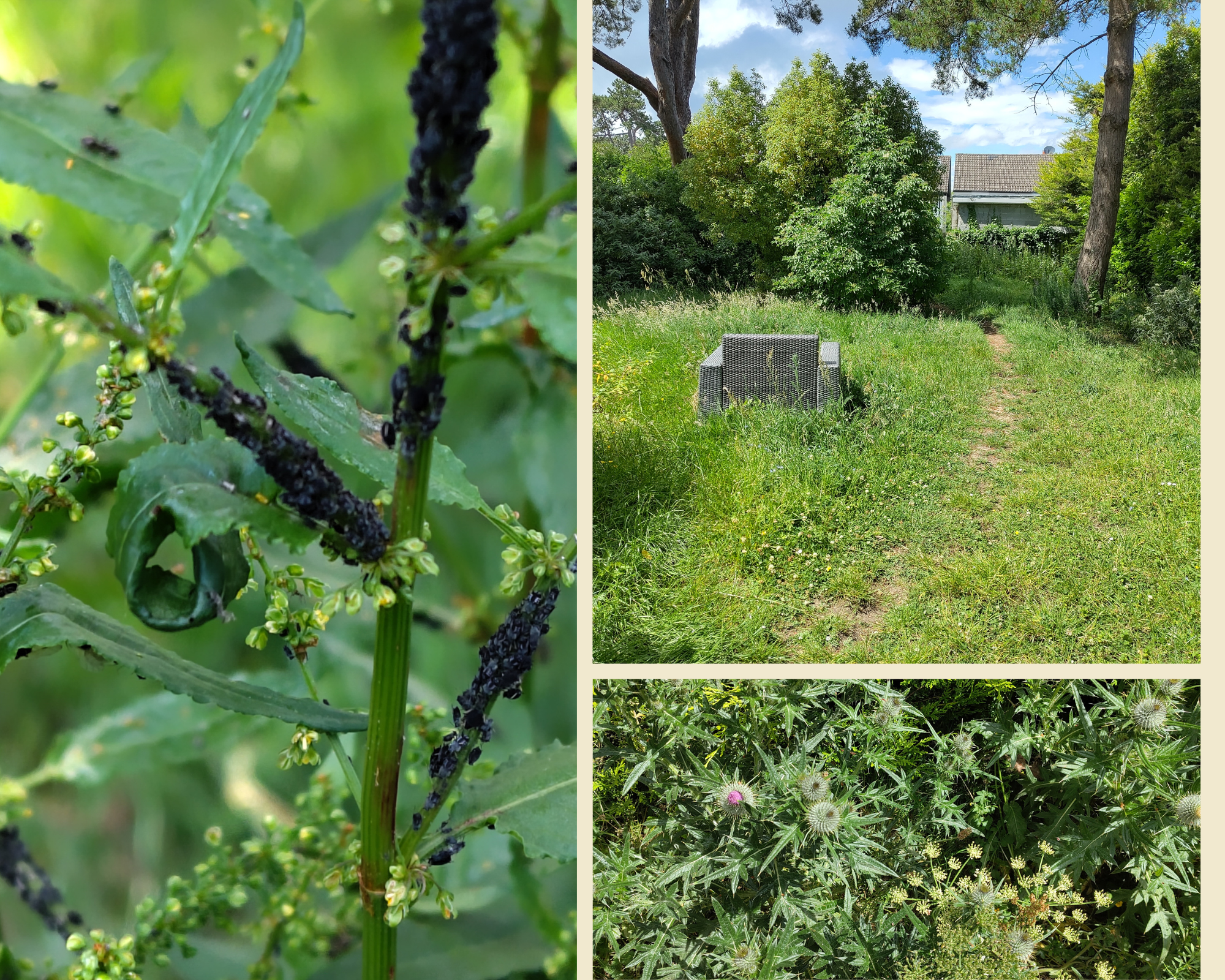
“Taking part in this blog project has made me much more observant about the garden, and every time I look carefully at it, I see a host of interesting things! The long grass has died back a little, and the tallest plants are now the Docks. Our charm of Goldfinches comes down regularly to feed on these Docks – whether on insects living on the stalks, or on the seeds of the plants, I’m not sure.
Watching the goldfinches has given me an appreciation of how the cultivated parts of the garden and the no-mow parts blend together. When we moved in, there was a rose bush in the garden – it’s a cultivated variety that doesn’t seem to attract bees particularly, but I’ve noticed that the goldfinches perch on the stiff rose stems to feed on the Docks, because the Docks themselves bend under the weight of the little birds. Wild and commercial plants both being used by our garden companions!
I’ve also noticed that some of the Dock stems are black with aphids, and that there are ants “farming” these (see photo). And there is a host of insects throughout the garden, more visible now that the grass is shorter. Sitting out to read my book, I spotted two neon green, delicate, small spiders in the grass by my feet. My field guide tells me that these are Cucumber Spiders! And there are Woodlice, Centipedes, and Earwigs living among the roots of the grass. No new plants this month, but the Thistles are now enormous and coming into flower, and the Nettles have also grown tremendously. I am looking forward to seeing what the new month will bring.”
Shauna:
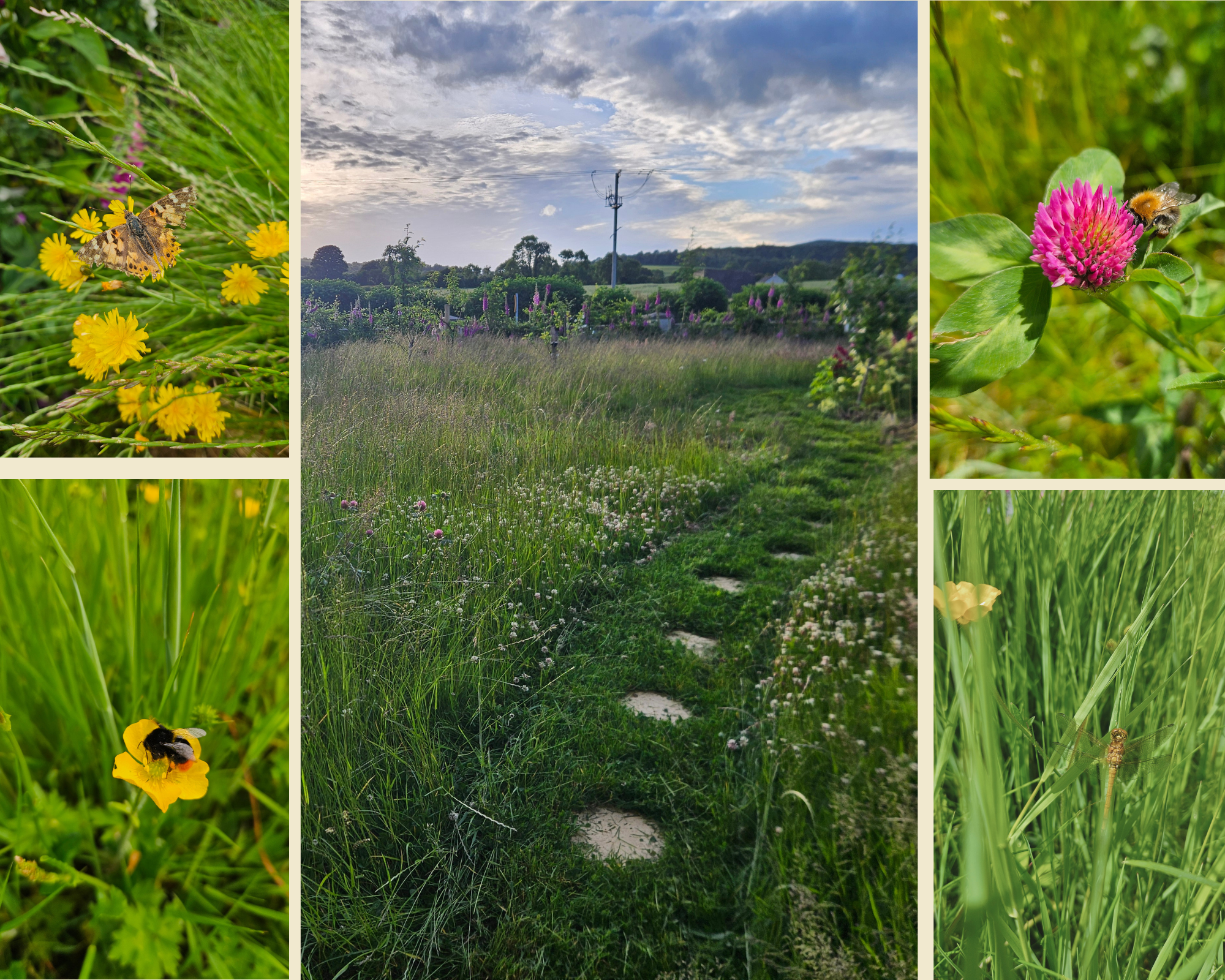
“We mowed a path and beside our hedge once in June, leaving the rest long. The buttercups and clover attracted many insects, especially Red-tailed bees. The hawkbit and self-heal are just starting to flower too, adding more yellow and purple to the lawn. There are a lot of grass seed heads now, which look especially lovely when they wave and sway in the wind.”
Thank you to these gardens and everyone who reduced mowing in June. If you want to start a low-mow lawn, find out more below:
Find out more:
- Create a short-flowering meadow
- Creating and restoring meadows in local communities and gardens
- Celebrating native wildflowers