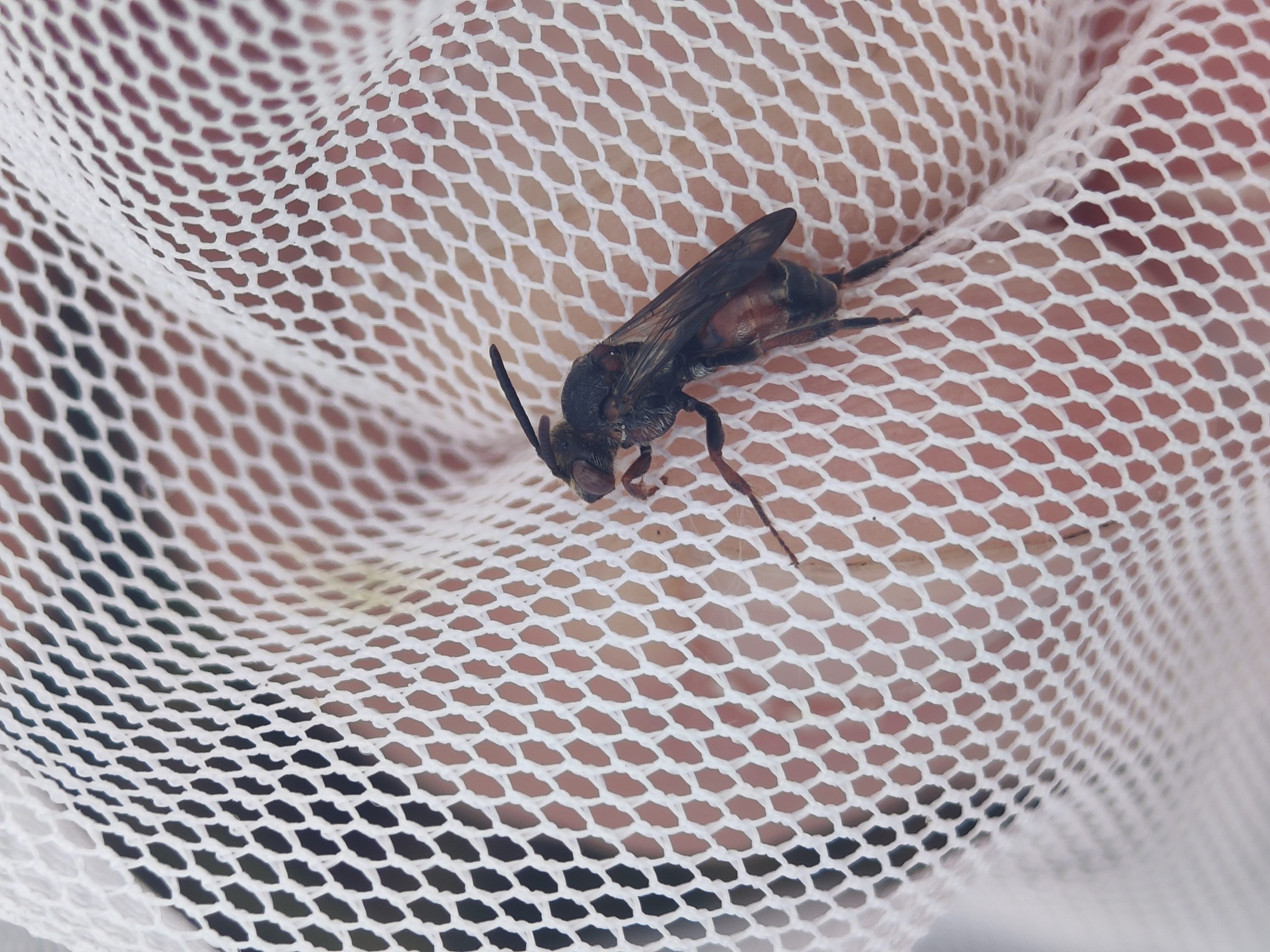
On 11th August 2026, All-Ireland Pollinator Plan Rare Species Pollinator Officer, Joshua Clarke, re-found the Critically Endangered Silver-sided Nomad Bee (Nomada argentata) in Co. Offaly by sweeping Devil’s-bit Scabious (Succisa pratensis) in suitable habitat.
Nomada argentata had not been seen in Ireland for 26 years prior to this new record, with just 7 confirmed records overall for the island from counties Galway, Laois, and Carlow. This new record makes it the 8th record, in a new county, and a new site for the species.
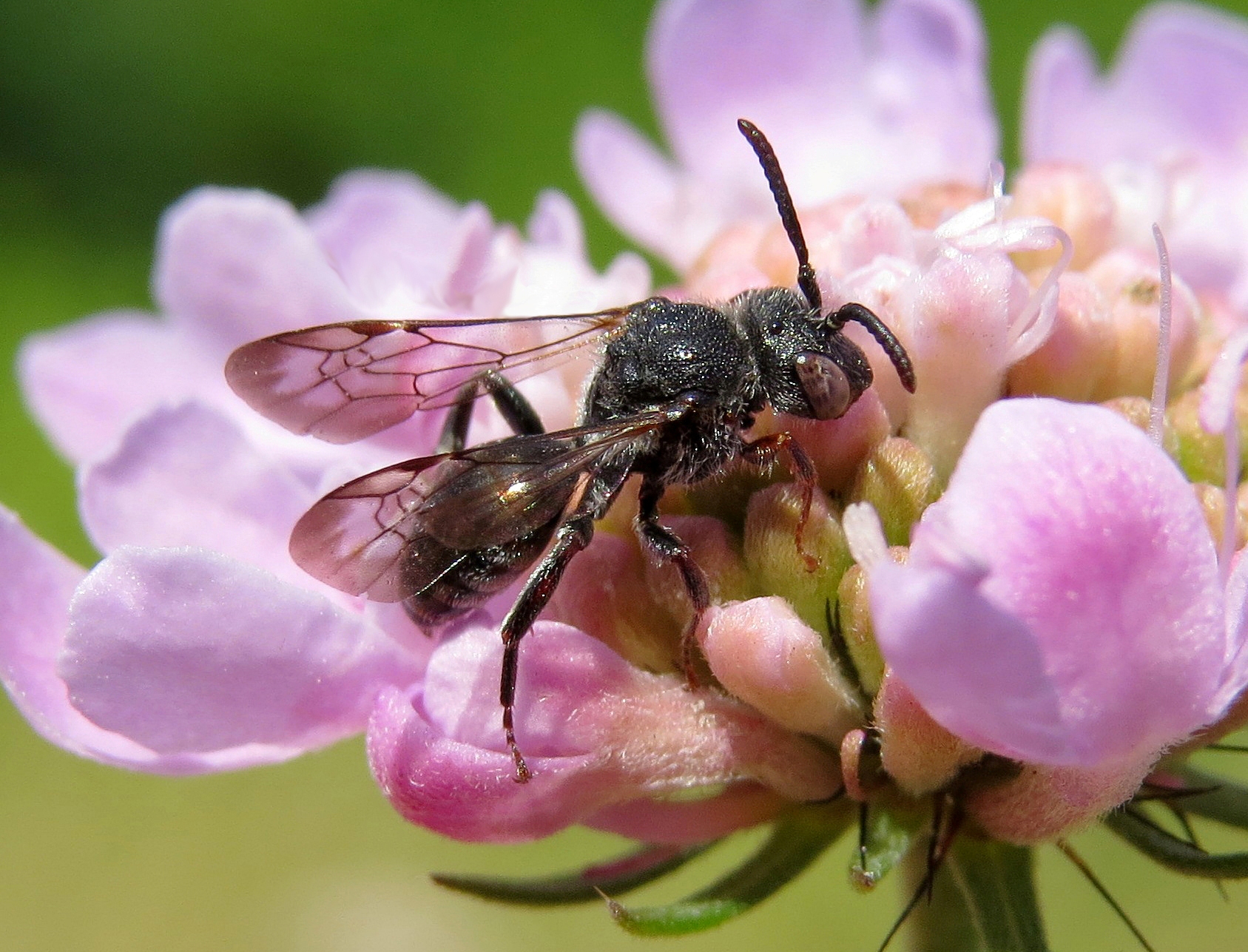
The Silver-sided Nomad Bee flies between mid-July to mid-September. Nomad bees are ‘cleptoparasites’ meaning that, similar to a cuckoo bird, they lay their eggs in the nest of a host species. Their larva then steals host resources, like collected pollen, to complete development. The host species for the Silver-sided Nomad Bee is the solitary Small Scabious Mining Bee (Andrena marginata). Both species are assessed as Critically Endangered on the Regional Red List of Irish Bees (Fitzpatrick et al. 2006), with the Nomad bee further assessed as Vulnerable in Europe (Michez et al. 2026) due to declines. In Britain, Silver-sided Nomad Bee is listed as rare (pRDB3) and Small Scabious Mining Bee as Scarce (Na) (Falk 1991), largely restricted to the southern counties.
As the host’s name suggests, these species should be searched for in habitats rich in scabious flowers like Devil’s-bit Scabious, though other associated flowers have included Knapweed (Centaurea sp.) and Red Bartsia (Odontites vernus). Typical habitats are dry calcareous grasslands, heaths, and stabilised coastal dunes. Both species are found in low densities making them challenging to survey, and their habitats are under threat from factors such as intensive agriculture and scrub encroachment.
This record follows on from new site records of the host Small Scabious Mining Bee by NBDC staff member Owen Beckett in August 2022, which followed a tip off about the new site from a local citizen scientist. The support and collaboration provided by these networks of specialists, recorders and citizen scientists are invaluable to the monitoring of our rarest and most threatened species and the habitats they depend on.
The Silver-sided Nomad bee and Small-scabious Mining Bee are 2 of the 15 rarest and most threatened pollinators Josh will be monitoring during the AIPP 2026 –2030.
The Rare Species Pollinator Officer position is funded under the Government of Ireland’s Shared Island Fund. To keep up to date on this project, more information can be found on pollinators.ie in the coming weeks and months.
Remember to submit any solitary bee records to the recording portal here: Recording System: Solitary bees
- Falk, S. (1991) A review of the scarce and threatened bees, wasps, and ants of Great Britain. Research and Survey in Nature Conservation No 35.
- Fitzpatrick, Ú., Murray, T.E., Byrne, A., Paxton, R.J. and Brown, M.J.F. (2006) Regional Red List of Irish Bees.
- Michez, D., Boustani*, et. al. (2026). Measuring the pulse of European biodiversity using the Red List. European Red List of Bees. Brussels, Belgium: European Commission. xi + 176 pp, https://doi.org/10.2779/52187