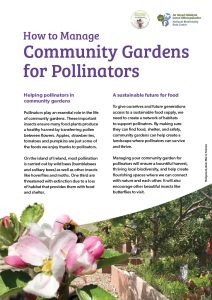
We are delighted to release a new resource ‘How to Manage Community Gardens for Pollinators‘.
This booklet, developed in collaboration with Community Gardens Ireland, provides guidance on how these important community spaces can support pollinating insects. It was launched on Saturday 20th June in Greystones and Kilcoole Community Garden, Co. Wicklow.
Pollinators like bees, hoverflies and moths play an essential role in the life of community gardens. They ensure many food plants produce a healthy harvest by transferring pollen between flowers. Apples, strawberries, tomatoes and pumpkins are just some of the foods we enjoy thanks to pollinators.
On the island of Ireland, most pollination is carried out by wild bees (bumblebees and solitary bees) as well as other insects like hoverflies and moths. One third are threatened with extinction due to a loss of habitat that provides them with food and shelter.
A sustainable future for food
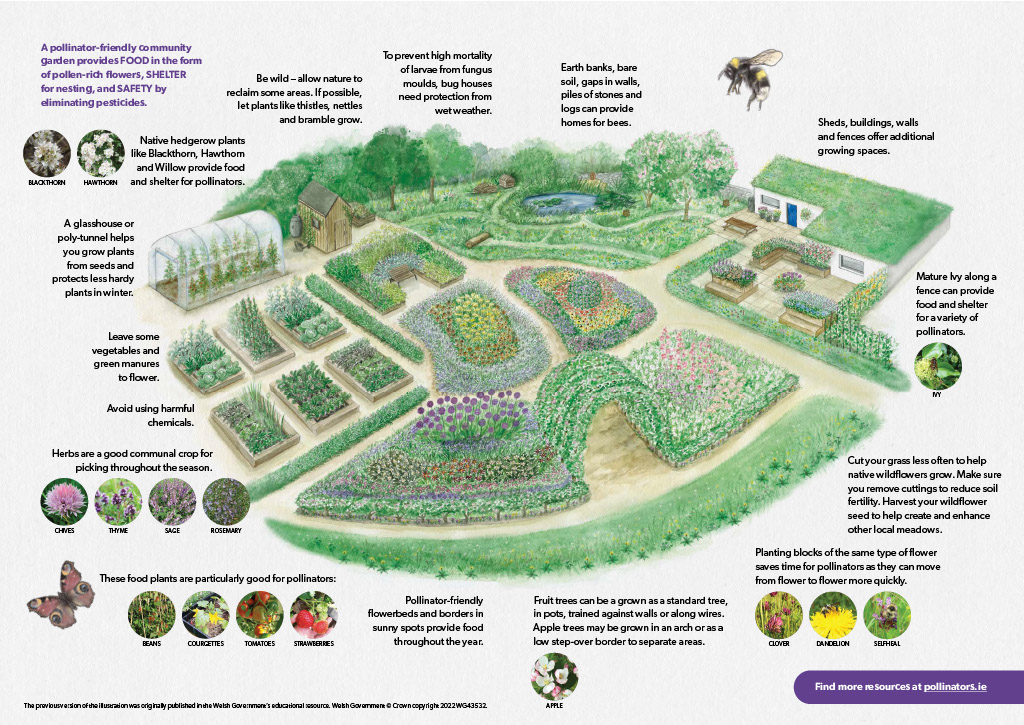
To give ourselves and future generations access to a sustainable food supply, we need to create a network of habitats to support pollinators. By making sure they can find food, shelter, and safety, community gardens can help create a landscape where pollinators can survive and thrive.
The new booklet includes advice on pollinator-friendly actions to suit community gardens of all sizes, including mowing less in grassy areas to encourage wildflowers to grow naturally, letting native trees and hedgerows bloom, and providing nesting habitat in the form of bare earth banks for solitary bees. It also includes lists of herbs, fruit and vegetable plants which rely on insect pollinators, and which can help feed hungry bees as well as humans. It will also encourage other beautiful insects like butterflies to visit.
Managing community gardens for pollinators ensures a bountiful harvest of locally grown food, thriving biodiversity, and flourishing spaces where humans can connect with nature and one another.
Kate Chandler, Communities Pollinator Officer for the National Biodiversity Data Centre said:
“All over the island of Ireland, community gardens are thriving spaces for social connection, human health and wellbeing. Pollinators are important – but often overlooked – members of our communities; they are essential for the growth of many food plants including apples, strawberries and tomatoes, and also support wild native plants. Like us, they need food and shelter to survive, ideally in an environment where chemicals are kept to a minimum or not used at all. Community gardens are perfect spaces to demonstrate how we can achieve a wider landscape where people and pollinators can thrive together. We were delighted to work with Community Gardens Ireland on this new booklet, which contains evidence-based actions for any community garden to help encourage pollinators like bees, hoverflies and moths to visit our communal growing spaces and support sustainable food production.”
Dónal McCormack, Co-Chairperson for Community Gardens Ireland said:
“Community gardens offer a sanctuary for people, plants and pollinators. These amazing spaces bring together all members of the community to sow, grow and harvest food together. We have seen a huge interest in community gardens throughout the island of Ireland and our vision is for every community to have a space to grow.
A hugely important part of the UN Sustainability Development Goals is about partnership and how we can work together to improve our environment. Community Gardens Ireland were delighted to partner with the National Biodiversity Data Centre to deliver this new booklet, and we wish to also thank Greystones Kilcoole Community Garden for hosting this event at their beautiful space.
Our hope is that this new booklet will help inspire more pollinator friendly community gardens throughout the island of Ireland.”
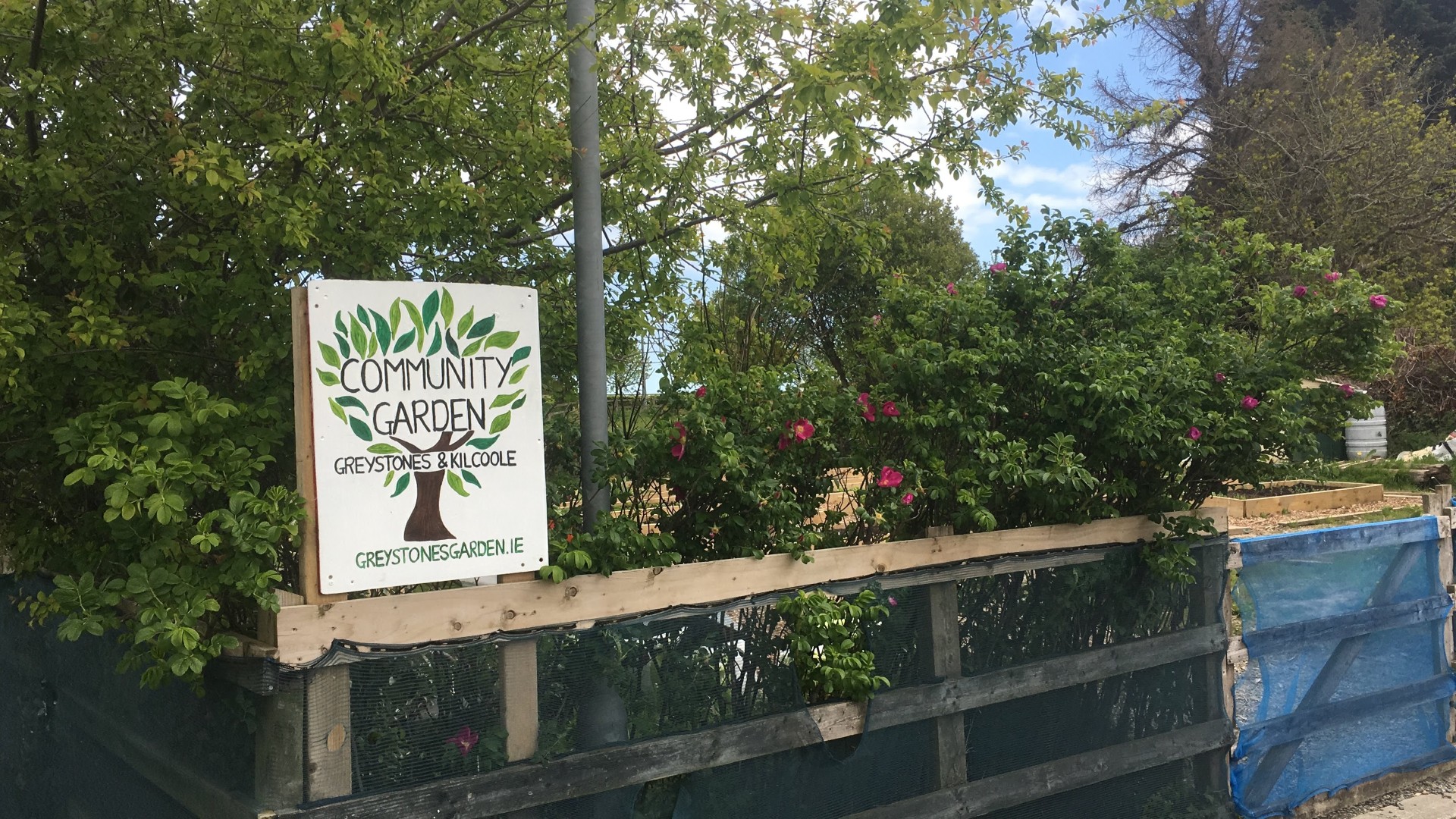
Adam Calihman, Co-chair/ Treasurer for Greystones & Kilcoole Community Garden said:
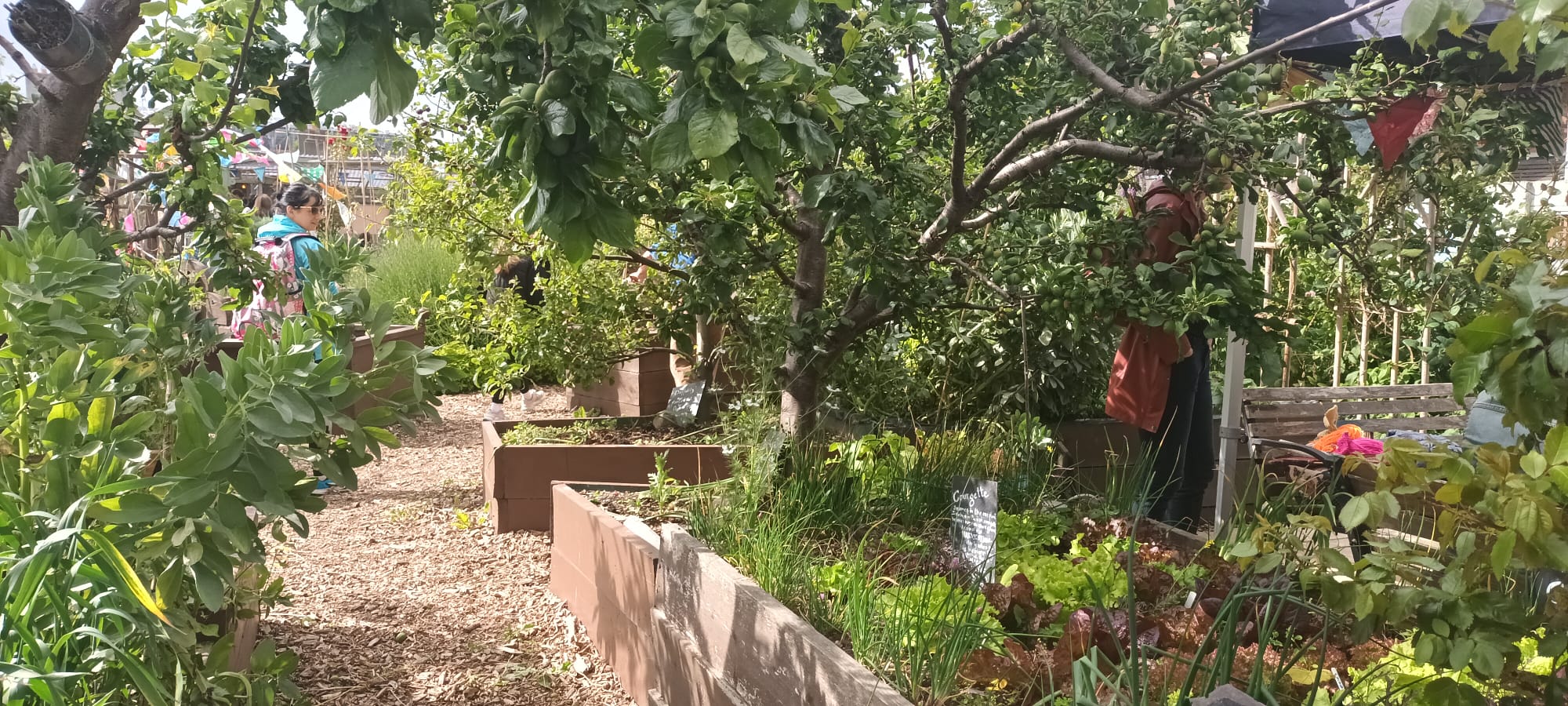
“The All-Ireland Pollinator Plan has been a valuable guide for many of the biodiversity actions we have taken in Greystones Kilcoole Community Garden and through wider community initiatives in the area. That’s why we’re especially excited to see this new booklet focused specifically on community gardens. It recognises that even small community growing spaces can make a meaningful contribution to pollinators, biodiversity and environmental stewardship.
At our garden, we see every day how growing food and supporting pollinators go hand in hand. Through chemical-free gardening, native hedge and tree planting, habitat creation, composting and community education, people develop a stronger connection to the natural world and a greater appreciation for the role pollinators play in both healthy ecosystems and the food we grow. Community gardens may be small in size, but their impact extends far beyond their boundaries.”
Find out more:
How to manage community gardens for pollinators (PDF)